It’s official: the Summer holidays are over and we are back! To celebrate, we’ve brought out our new catalogue . It captures some famous sporting moments, such as Botham in 1981, Laker in 1956, England football in 1966,the West Indies cricket team in 2003 and a signed (by James Hunt himself, Graham Hill, Tony Brise, Denny […]
It’s surprising to learn that John Astley Cooper first proposed what has become the Commonwealth Games in 1891: 5 years before the Modern Olympics. The plan was to hold a sports competition every four years “as a means of increasing goodwill and understanding of the British Empire”. Committees were set up throughout the Empire to […]
The History of the Commonwealth Games
It’s surprising to learn that John Astley Cooper first proposed what has become the Commonwealth Games in 1891: 5 years before the Modern Olympics. The plan was to hold a sports competition every four years “as a means of increasing goodwill and understanding of the British Empire”. Committees were set up throughout the Empire to develop the idea. It is claimed that this inspired Pierre de Coubertin to develop the modern Olympics.
In 1911 a prototype ‘Inter-Empire Championship was held in London to celebrate King George V’s coronation. The initial sports were athletics, boxing, swimming and wrestling. Canada won against the United Kingdom, Australasia and South Africa – a fairly limited representation of the Empire at the time!
The First British Empire Games in 1930
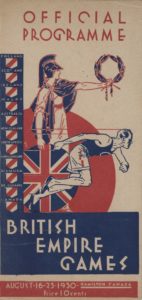
It took another 19 years before the inaugural British Empire Games were held in Hamilton, Canada in 1930. Eleven countries took part – Australia, Bermuda, British Guyana, Canada, England, Newfoundland, New Zealand, Northern Ireland, Scotland, South Africa and Wales. 400 athletes took part with women only taking part in the swimming events. Canadian triple jumper, Gordon Smallacombe, won the first ever gold medal in the history of the Games.
The British Empire & Commonwealth Games in 1954
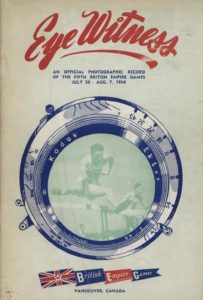
In 1954 the Games were held in Vancouver in Canada but this time with a name change. The Games became the British Empire and Commonwealth Games in 1952 when Queen Elizabeth II came to the throne. These were the first televised version of the Games and people around the world watched England’s Roger Bannister win the gold medal by running a sub four minute mile race.
The First British Commonwealth Games in 1970
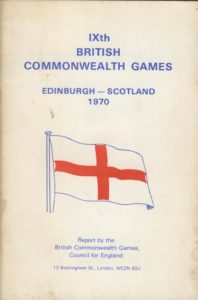
The British Empire and Commonwealth Games continued every four years until they were renamed AGAIN in 1970. The British Commonwealth Games took place in Edinburgh and Queen Elizabeth II attended for the the first time as Head of the Commonwealth. All the events were measured by metric units for the first time too with the 100 yard ‘dash’ becoming the 100 metres, for example. We’re assuming they still ‘dashed’ in the race.
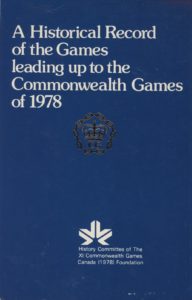
Finally in 1978 the Games became THE COMMONWEALTH GAMES. They were held in Canada and 46 countries took part. In 2018 it became the first global, multi-sport competition to offer equal medal events for men and women. In 2022 women’s events outnumbered men’s for the first time. In 2026 in Glasgow 74 nations are taking part with 3000 competitors, some of them in the 47 para-sports events included too. 4000 volunteers are helping to run the Games from the age of 16-96. From a very fusty ’empirical’ beginnings, the Commonwealth Games have come a long way.