England at the FIFA World Cup over the years – it’s certainly been a journey! From crushing defeat to glorious victory…to who knows what the 2026 tournament will bring. We’ve still got the fun and great hope of not knowing at this point. The first World Cup took place in Uruguay in 1930. FIFA chose […]
Was Jim Thorpe the greatest athlete in the world? King Gustav V of Sweden certainly thought so. He described Thorpe thus as he handed him two gold medals at the 1912 Stockholm Olympics. Jim Thorpe was a legendary Native American sportsman, who lived from 1888 – 1953. He was a Sac and Fox Native American, […]
Our most recent New Stock catalogue has a huge range of sports as usual. It also has quite a fine line in rare and classic fitness and wellbeing books too. Any of them should help you get ready for the summer! One of the most direct of the fitness and wellbeing books is ‘Be Fit […]
England Football Team at the FIFA World Cup
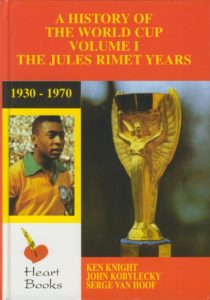
History of the FIFA World Cup, 1930-1970
England at the FIFA World Cup over the years – it’s certainly been a journey! From crushing defeat to glorious victory…to who knows what the 2026 tournament will bring. We’ve still got the fun and great hope of not knowing at this point.
The first World Cup took place in Uruguay in 1930. FIFA chose Uruguay to celebrate its 100th anniversary of its first constitution. Uruguay had also been the Olympic football champions at the last Olympics in 1928 so they seemed worthy hosts. Only 13 teams took part in the tournament: all FIFA’s members were invited to take part. 7 of the teams were from South America; 2 were from North America and only 4 were from Europe.
It was the depths of the Great Depression and many European countries felt that Uruguay was too far and expensive for their teams to attend. England wasn’t even invited as it wasn’t a member of FIFA. It had broken away from FIFA two years earlier in a dispute about ‘broken time’ compensation for players. The pure-minded FA were against amateur players being compensated for time off work to play football matches. They also felt that they were the originators and therefore guardians of the ‘beautiful game’ and possibly gave international competitions less respect than they deserved.
The Second World War changed everyone’s perspective, unsurprisingly, and the FA rejoined FIFA in 1946. England looked to the 1950 World Cup in Brazil with supreme confidence. Even the host nation called England the ‘kings of football’. England’s team was fantastic on paper: those, such as Matthews, Finney, Mannion, Mortensen, Wright and Milburn were all already footballing heroes. But the FA decided it would be too expensive to send them in advance to acclimatise to the hot Brazilian climate. They put them up in a hotel opposite the Copacabana beach, where they got little sleep. The food was poor and almost all of the team became sick at one time or another. Matthews was completely underutilised and the team were ignominiously knocked out of the tournament by none other than a fledgling USA team. 1950 has to be one of the greatest lows of England at the World Cup over the years.
Was it the nadir? That should be the subject of many a footie debate. Do the three World Cups count where England didn’t even qualify?!
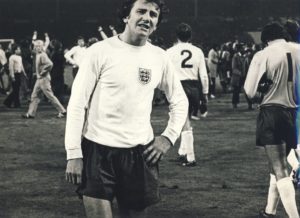
Roy McFarland as England goes out of the World Cup in 1973
England’s failure to qualify for the World Cup in 1974 was particularly painful. The England team were strong: Moore, Banks, Hurst and Peters were at their peak along with the great Gordon Banks in goal. Young stars were emerging too, like Osgood, Hudson and George. England was also lucky enough to be in a seemingly weak group with Wales and Poland. But Poland were England’s undoing. Shockingly they went to the top of the group. England had to beat them to qualify. The score was 1-1: devastating for England, particularly as it led to the end of Sir Alf Ramsey’s 11 year reign as England manager.
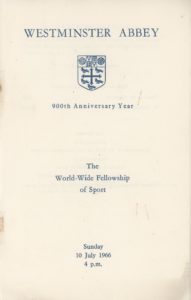
England didn’t qualify for the next 1978 World Cup in Argentina or the 1994 World Cup in the USA either. But let’s never forget that in 1966, we became the 5th nation to win the event and the 3rd host nation to do so. Did it help that the Worldwide Fellowship of Sport held a World Cup Service at
The 1966 World Cup Service at Westminster Abbey
Westminster Abbey on the eve of the 1966 World Cup? It can’t have hurt! Do we need to rely this time on a little divine intervention too?! Hopefully not. In the last two World Cups England has done respectably. It won 4th place in the World Cup in Russia in 2018 and England reached the Quarter Finals in 2022. England has had one cracking game in the tournament and one wake up call. It’s still all to play for!
Jim Thorpe: was he the Greatest Athlete in the World?
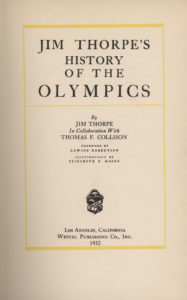
You can find Jim Thorpe’s Olympic memoirs in our New Stock Catalogue 60
Was Jim Thorpe the greatest athlete in the world? King Gustav V of Sweden certainly thought so. He described Thorpe thus as he handed him two gold medals at the 1912 Stockholm Olympics.
Jim Thorpe was a legendary Native American sportsman, who lived from 1888 – 1953. He was a Sac and Fox Native American, who was orphaned early. He was raised in government schools. He was phenomenal at all sports. When he was 5’8 he tried high jump for the first time while in high school. He jumped 5’9.
In 19o9 and 1910, he played baseball for the Rocky Mountain club in North Carolina, for which he received small payments. When he competed at the Olympics in 1912, he won the pentathlon AND the decathlon. He beat his nearest challenger by nearly 700 points and set a world record, which lasted until 1948. It was this that prompted King Gustav V to describe him as the ‘greatest athlete in the world’.
Cruelly, The IOC stripped Thorpe of his medals a year later in 1913 when the payments he had received from the Rocky Mountain Club came to light. As upsetting as that must have been, Thorpe moved on, winning: he was one of the first major stars of professional American football. He played a part in the creation of the NFL and became its first president in 1920.
After Thorpe retired from professional sport, he took minor roles as a Native American in 50 films up until the 1950s when he died. In 1983 the IOC also reinstated his medals in a moving ceremony with two of his children there. Certainly one of the sporting greats and certainly a life well lived: worth reading about too – and you can do so in his History of the Olympics in our newest New Stock catalogue!
Fitness and Wellbeing in Sportspages’ New Stock Catalogue
Our most recent New Stock catalogue has a huge range of sports as usual. It also has quite a fine line in rare and classic fitness and wellbeing books too. Any of them should help you get ready for the summer!
Be Fit or be Damned!
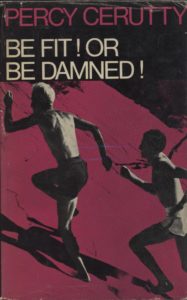
One of the most direct of the fitness and wellbeing books is ‘Be Fit or Be Damned!’ – published in 1968: the title betrays the not so touchy feely approach to getting fitter: It’s written by the highly regarded spoott rts coach, Percy Cerutty, who trained Herb Elliot and John Landy among others.
The 100-Up Exercise
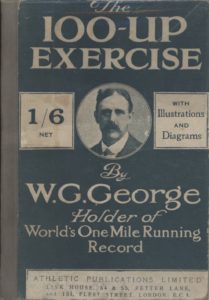
Another title is by Walter George, one of the most foremost athletes of the Victorian era and holder of the World mile record that lasted for 30 years. The 100-Up Exercise is a rare book, published in 1913. It details George’s amazing career and describes his pioneering training methods, including – of course – the famous 100-Up exercise!
Body-Building, Or Man in the Making: How to Become Healthy and Strong
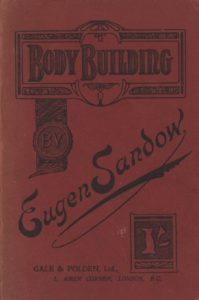
An even earlier tome on fitness and wellbeing is Eugen Sandow’s book on bodybuilding. The celebrated Edwardian Strongman’s book is scarce and was published c. 1904. He manages to relate his then recent tour of Australasia AND shares his philosophy and systems of fitness and bodybuilding along with recommending a series of exercises.
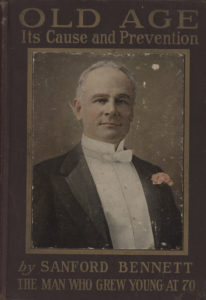
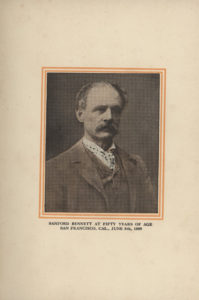
If you feel like the above books are not ‘talking to you’, we have one final peach that all of us should be fighting to buy: Old Age: its Cause and Prevention. Sandford Bennett, the man, who rolled back time and ‘grew young at 70’ clearly has something to teach us about fitness and wellbeing. Witness his transformation – and how he did it – throughout the book, starting with the frontispiece. That shows him at 50 (apparently), while the front cover shows him at 70. We can only assume this book flew off the shelves when it was published in 1912:
Sandford Bennett…at 70!‘Old Age’ Frontispiece: Sandford Bennett at 50 (apparently)
Sportspages’ New Stock catalogue
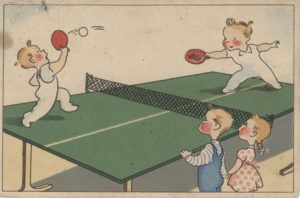
This quirky, 1930s Hungarian table tennis postcard is in our newest New Stock catalogue: https://www.sportspages.com/catalogue/new-stock-58 along with over 100 other items from nearly as many sports. Our catalogues come out regularly: don’t miss them by signing up for them on the bottom of our home page!
Channel your inner Marty Supreme in our New Stock catalogue
What is the England v Australia Ashes Origin Story?
What is the England v Australia Ashes Origin Story?
As we all know, the England v Australia rivalry in cricket goes back a long way but do you know the details of the Ashes Origin Story? The first test match between the two countries was in 1877 when James Lillywhite led an England team on a tour to Australia and New Zealand. England and Australian teams then took it in turns to tour and play in each other’s country. In 1882 the Australian team came to England and events took a fateful turn.
The Ashes Origin story began on the 29th August 1882 at the Oval when Australia had its first Test win on English soil. England lost by a nailbiting, heartbreaking 7 runs. A journalist in the Sporting Times wrote a witty ‘obituary’ for English cricket, saying, “…in affectionate remembrance of English cricket, which died at the Oval on the 29th August 1882.” He went on to say that ‘its body will be cremated and the Ashes taken to Australia’, where England was due to play Australia again a few weeks later.
England captain, the Hon. Ivo Bligh, immediately took up the cudgel. He vowed to regain those ashes and the media dubbed the subsequent tour as the ‘Quest to Regain the Ashes’. When England won 2 out of the 3 Tests, some women presented him with a tiny urn, labelled, ‘The Ashes of Australian Cricket’ with some ashes inside. The original urn is now in the MCC museum at Lord’s
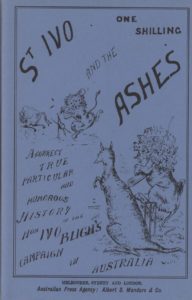
St Ivo and the Ashes, Ivo Bligh’s cricket campaign in Australia
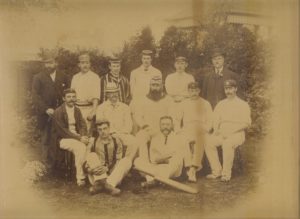
You can read more about the origin of the Ashes and Hon Ivo Bligh’s Campaign to reclaim them in the great book, ‘St Ivo and the Ashes’. The next Ashes campaign was in England in 1884 and England won again. The 1884 Ashes included the inaugural Test at Lord’s. England won there with some spectacular batting from AG Steel and a catch for England…by the Australian captain! Weirdly he was standing in for his friend, WG Grace, who was off the pitch at the time – a time of more fluid cricket match rules!
Australia and England have won almost the same number of Ashes contests since they began. There have been 73 Ashes campaigns since 1882. Australia have won 34 and retained the Ashes 6 times from draws. England has won the Ashes 32 times and retained them once from a draw. Let’s hope England get’s closer to evening up the score this time.
The 1884 England cricket team at the inaugural Ashes Test match at Lord’s
Nils Middelboe – Chelsea FC’s first Foreign Player
A bit of Ryder Cup History
We’re eagerly awaiting the start of this year’s Ryder Cup. We’ve been testing ourselves – and failing – on what we know about its history. So we did a bit of digging and here’s what we found:
Samuel Ryder originally sponsored the Ryder Cup after watching a friendly transatlantic match at Wentworth in 1926. Ryder was a workaholic, cricket-mad businessman, who had taken up golf at the age of 50 to try and relax a little more. He loved the game and decided to sponsor a formal, professional golf tournament between a team of Americans and Brits. He commissioned a 19 inch gold chalice from jewellers, Mappin and Webb, for £300.00.
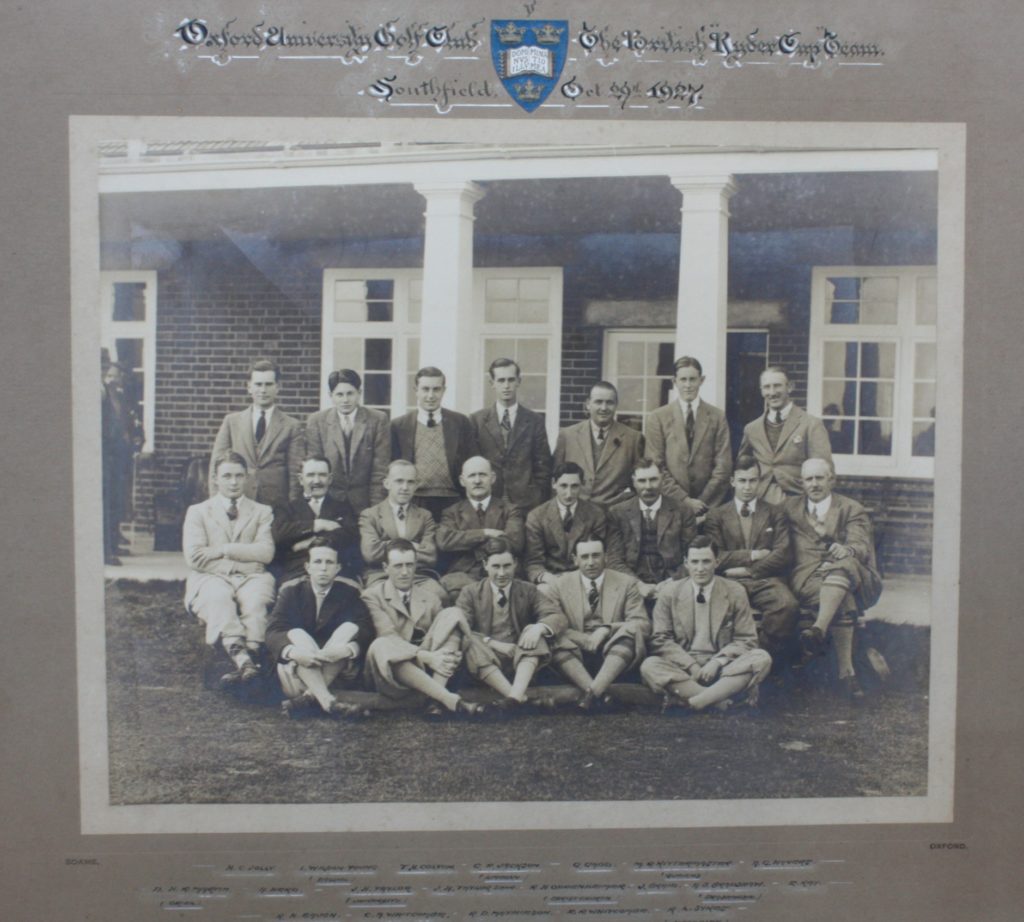
Walter Hagen was the first American captain in 1927. JH Taylor was the British captain. Taylor, like Hagen, is considered to be one of the best golfers of all time. Taylor and the British team are seen here with the Oxford team. Taylor’s son, Jack was on the Oxford team:
First British Ryder Cup Team, 1927, along with the Oxford golf team
Sadly, 1927 was not to be Britain, JH Taylor’s – or Samuel Ryder’s year. Walter Hagen was the first winning captain to lift the Ryder Cup. The Americans won convincingly: 9 1/2 to 2 1/2. Samuel Ryder was not able to attend the tournament due to ill health. He did, however, live to see Britain reclaim the Ryder Cup twice on home soil: in 1929 and 1933. Samuel Ryder died in 1936, buried with his favourite 5 iron. A passionate golfer to the end!
Grimsby Town defeat Manchester United in an EFL Cup Shootout
The 1921 Australian Cricket Team – a signed real photograph postcard
Denis Law, RIP: One of the finest attackers in football history