Our most recent New Stock catalogue has a huge range of sports as usual. It also has quite a fine line in rare and classic fitness and wellbeing books too. Any of them should help you get ready for the summer! One of the most direct of the fitness and wellbeing books is ‘Be Fit […]
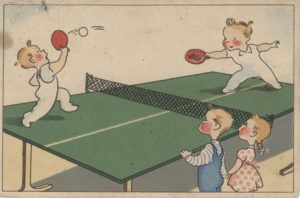
This quirky, 1930s Hungarian table tennis postcard is in our newest New Stock catalogue: https://www.sportspages.com/catalogue/new-stock-58 along with over 100 other items from nearly as many sports. Our catalogues come out regularly: don’t miss them by signing up for them on the bottom of our home page!
What is the England v Australia Ashes Origin Story? As we all know, the England v Australia rivalry in cricket goes back a long way but do you know the details of the Ashes Origin Story? The first test match between the two countries was in 1877 when James Lillywhite led an England team on […]
Fitness and Wellbeing in Sportspages’ New Stock Catalogue
Our most recent New Stock catalogue has a huge range of sports as usual. It also has quite a fine line in rare and classic fitness and wellbeing books too. Any of them should help you get ready for the summer!
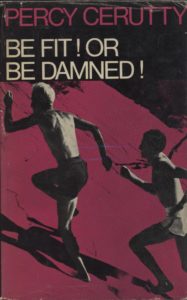
Be Fit or be Damned!
One of the most direct of the fitness and wellbeing books is ‘Be Fit or Be Damned!’ – published in 1968: the title betrays the not so touchy feely approach to getting fitter: It’s written by the highly regarded spoott rts coach, Percy Cerutty, who trained Herb Elliot and John Landy among others.
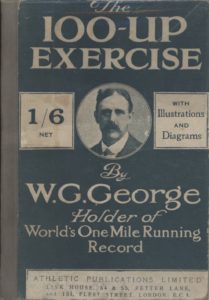
The 100-Up Exercise
Another title is by Walter George, one of the most foremost athletes of the Victorian era and holder of the World mile record that lasted for 30 years. The 100-Up Exercise is a rare book, published in 1913. It details George’s amazing career and describes his pioneering training methods, including – of course – the famous 100-Up exercise!
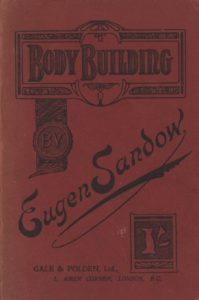
Body-Building, Or Man in the Making: How to Become Healthy and Strong
An even earlier tome on fitness and wellbeing is Eugen Sandow’s book on bodybuilding. The celebrated Edwardian Strongman’s book is scarce and was published c. 1904. He manages to relate his then recent tour of Australasia AND shares his philosophy and systems of fitness and bodybuilding along with recommending a series of exercises.
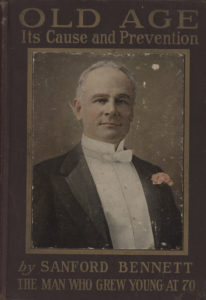
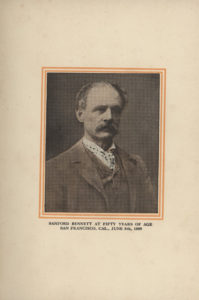
If you feel like the above books are not ‘talking to you’, we have one final peach that all of us should be fighting to buy: Old Age: its Cause and Prevention. Sandford Bennett, the man, who rolled back time and ‘grew young at 70’ clearly has something to teach us about fitness and wellbeing. Witness his transformation – and how he did it – throughout the book, starting with the frontispiece. That shows him at 50 (apparently), while the front cover shows him at 70. We can only assume this book flew off the shelves when it was published in 1912:
Sandford Bennett…at 70!‘Old Age’ Frontispiece: Sandford Bennett at 50 (apparently)
Sportspages’ New Stock catalogue
This quirky, 1930s Hungarian table tennis postcard is in our newest New Stock catalogue: https://www.sportspages.com/catalogue/new-stock-58 along with over 100 other items from nearly as many sports. Our catalogues come out regularly: don’t miss them by signing up for them on the bottom of our home page!
Channel your inner Marty Supreme in our New Stock catalogue
The Australian Cricket team in England
A new sport for the New Year: Bumble puppy!
Sporting Legends we have lost
When we sent out our first New Stock Catalogue of the year, we realised it had been a while – too long! – since our last one in September. We reflected on the sporting legends we had lost just since September – way too many. We thought we’d like to make at least brief mention of a few of them here.
They come from so many different sports – boxing’s Gerrie Coetzee from South Africa, formula one’s Patrick Tambay from France and our own horse racing commentator, John Hanmer to name a few. Sadly they were joined by Ryder Cup golfer, Barry Lane, cricket’s Robin Marlar and Jeremy Lloyds, and David English, who raised £14 million for charity through the Bunbury Cricket Club. We lost Maurice Norman, part of the Double-winning Tottenham Hotspur team of 1960-61 and Brian Robinson too, the first British cyclist to finish the Tour de France AND win a Tour Stage.
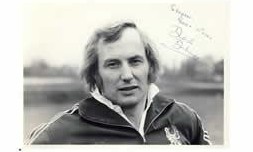
David Duckham, British Lions
Two great titans of rugby left us too: David Duckham and Doddie Weir. Duckham gained 36 England caps and was part of the revered British Lions squad, who beat the seemingly undefeatable All Blacks in 1971. Scotland’s Doddie Weir also starred with with the British Lions before he was tragically diagnosed with Motor Neurone Disease in 2016. By the time he left us in November, his foundation had raised £8 million for MND research.
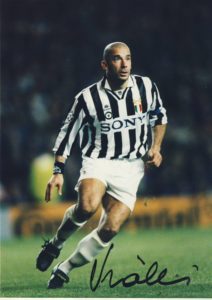
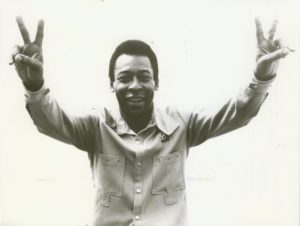
All these sportsmen were tremendous and we are honoured to remember them. They were also joined by 3 huge sporting legends: England’s World Cup star, George Cohen, Italy’s Gianluca Vialli and Brazil’s incomparable Pele.
George Best called England World Cup winner, George Cohen, “The best full-back I ever played against”. Cohen spent his entire career in football at Fulham. One could almost describe Gianluca Vialli and Cohen as footballing ‘neighbours’. Vialli was an extremely talented footballer, who played for Italy in 2 World Cups. It was arguably at Fulham’s neighbouring club, Chelsea, however, that he left his most indelible stamp. As a beloved player-manager, he helped Chelsea win the FA Cup, the League Cup and the Cup Winners’ Cup.
All of these sportsmen have been phenomenal throughout their respective sporting careers…but when it comes to sporting legends, it is hard for anyone to come close to the late and great Pele. He began his professional career at 15 and made his international debut a year later. He won 3 World Cups as a player over a 14 year international career. In 1999 a poll of Ballon d’Or winners voted him player of the century. He was. We salute him and we salute them all.
Uruguay World Cup Football 1930
King Charles III and Cricket
King Charles III and cricket
We have been contemplating the huge job in front of King Charles III. We reminded ourselves what an able man he has shown himself to be over the years. Us being us, we looked to sport for the clues. We all know what a great polo player and general equestrian he was. We’ve seen him skiing, sailing, windsurfing and fishing. Less well known was his success on the cricket field.
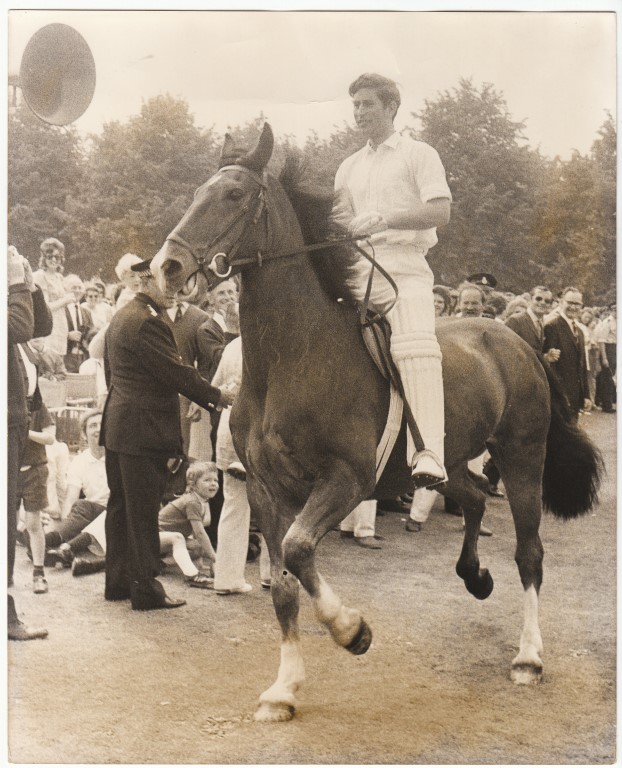
Following in his father, the Duke of Edinburgh’s footsteps, Charles was an enthusiastic and able cricketer. In 1971 he arrived on horseback, all padded up for a cricket match at Cranwell in Lincolnshire. Prince Charles was in an RAF team against the Lord’s Taverners. He batted gamely and scored 17 runs but was bowled by the recently retired Surrey and England cricketing legend, Ken Barrington. Undeterred Prince Charles returned to the crease to bowl 7 overs and wreaked revenge on Ken Barrington by bowling him out.
We wish the new King continued success, going forward. Is it a sign of the power he might have that England won a Test series against South Africa two days into the start of his new reign?!
England’s Lionesses in the Women’s Euros 2022: How far women’s football has come!
In World War One, however, many women worked together in factories for the first time. They were encouraged to keep fit for work. So they banded together to form football teams and fill the football stadiums that the men had left behind them as they went off to fight. By 1920 a Boxing Day football match between England’s top female teams, Dick, Kerr Ladies v St Helen’s, filled Everton’s Goodison Park stadium with 10,000 turned away at the gates.
But women’s football became a victim of its own success. Feeling threatened, possibly, by the success of women’s football and what effect that might have on men’s football after World War One, the FA issued a ban on 5th December 2021. No member club could let women’s teams play on their grounds. They claimed that women’s teams had siphoned off money they raised for charity for their expenses. They encouraged some doctors’ views that playing football might be bad for a woman’s body and might even stop a woman becoming pregnant.
The FA stuck to its edict. In 1947 the Kent County FA suspended a referee because he also trained a women’s football team. It was only in 1971 that the FA finally lifted their ban against women’s football. How we’d love to go back and tell all those women footballers, who persevered despite all obstacles, that in 2022 the BBC delayed the News at 10 so that we could all watch the end to another thrilling Lionesses’ game (depending on how far back we went, we might have a struggle explaining the BBC’s News at 10 first!).
It’s just not cricket…or is it?
It’s just not cricket…or is it? Cricket as a sport has always been seen as one steeped in good manners. In recent years, however, we have all lived through incidents of ball tampering and match fixing in recent cricket matches. Is this a recent phenomenon? Or despite cricket’s gentlemanly reputation, has cunning behaviour been a part of the sport since its beginning?
One of the sport’s earliest organised matches was between Chertsey and the world’s first cricket club, Hambledon. Hambledon had an extremely strong team, including leading bowler, Thomas Brett, and captain, Richard Nyren. They hadn’t bargained on a genius batsman from Chertsey however. Thomas ‘Shock’ White came out to bat…with a bat as wide as the stumps! At that point, a bat as wide as you like was perfectly legal. It hadn’t yet occurred to anyone to play with an outrageously wide bat or to restrict their dimension. Funnily enough, Hambledon quickly put in a formal written protest and by 1774 the Laws of Cricket had been changed. The legal width of a bat was restricted to today’s maximum size of 10.8 cm.
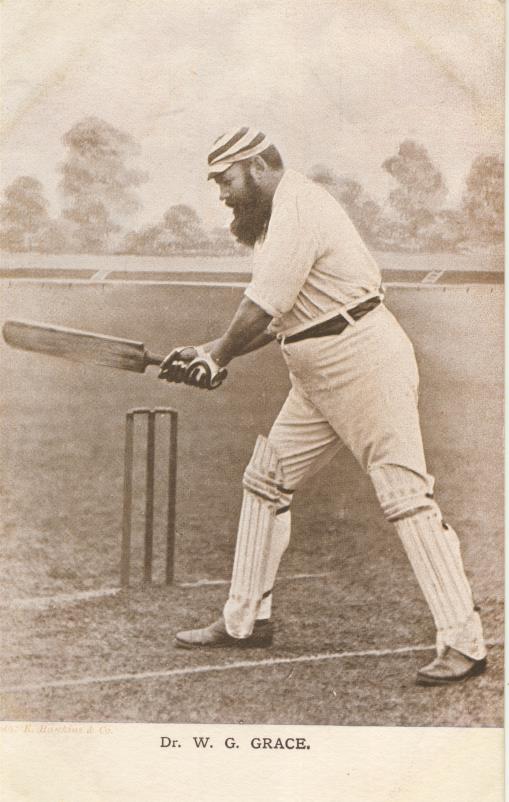
One of the greatest cricketing names in history had a slightly questionable reputation for ‘gentlemanly behaviour’: W G Grace. Grace was known to be a notorious sledger – generally frowned on if not actually illegal in cricket. The great batsman was also said to have at times ignored being bowled out. He simply replaced the bails after a bowler had disturbed his wicket and carried on batting regardless. He was claimed to have told the ‘offending’ bowler, “They’ve come to watch me bat, not you bowl”, which may have been fair comment too. Obviously we all want well behaved, legal cricket teams to support and matches to watch but nothing beats a cricket match nailbiter to watch, especially with a bit of controversy thrown in too!
Sports Books titles – the best of all time?
The (ab)use of the pun in the titles of sports books:
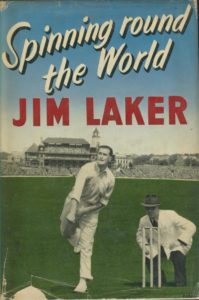
The use of puns in the titles of sports books, particularly biographies, is nothing new. 1951 gave us Plum Warner’s “Long Innings” and Jim Laker’s “Spinning Round The World”, and so a new tradition was established. Ever since these early attempts at punnery any sportsperson who was tempted to put pen to paper, however misguidedly, could tap into the rich resource thrown up by unusual sporting terms and phrases. To be honest, the vast majority need more than just a promise of dressing room banter and blow by blow accounts of their on-field triumphs to help sell their books. If Steve Davis had called his autobiography simply “My Story” or “I won Lots of Snooker Matches” instead of “Frame and Fortune” life could have been very different.
Often the pun gives a clue to the sport involved – “A Game to Love” by – surprise, surprise – tennis’ Ann Jones, Bernhard Langer’s “While the Iron is Hot”, “Life in the Fast Lane” by Eddie Irvine and “Another Hurdle” by David Hemery. It can also relate to the role or position that the subject played in his/her chosen sport. Who can guess what the subjects of these books did for a living? “The Breaks Are Off”, “Running Commentary”, “I Declare”, “Right Back To The Beginning”, “In The Long Run” and “In Safe Keeping” – answers below.
Cricket books probably give the best opportunities for this approach – “All Round View” (Imran Khan), “A False Stroke of Genius” (Wayne Larkins), “The Gloves Are Off” (Godfrey Evans), “Lasting the Pace” (Bob Willis), “Runs in the Family” (John Edrich) and “Over and Out” (Denis Lillee) being some good examples. Some puns can be unforgivable – a serial offender was Graham Dilley with “Swings and Roundabouts” and “Hick and Dilley Circus”, but there are others – “No Bull” (Andy Bichel) and “Playing it Straight” (Ken Barrington) take a bow. One cricket title is so obvious that it has been used more than once – Geoff Boycott, Glenn Turner and Mike Atherton all used “Opening Up”. I wonder if Alastair Cook will be tempted to follow in a great tradition.
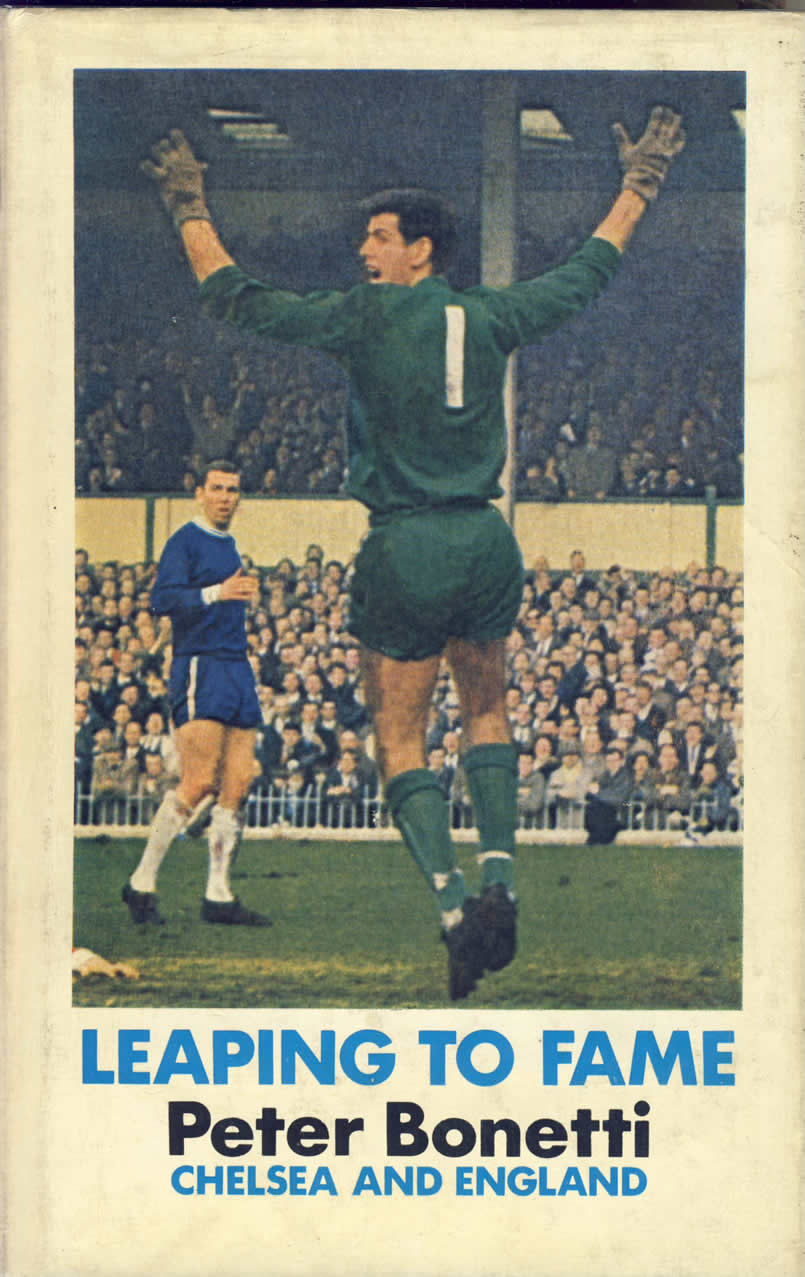
Rugby and football also provide opportunities for the play on words – “Centre of Excellence” (Jim Renwick), “Rubbing Shoulders” (Phil Blakeway) and “Kicked Into Touch” (Paul Thorburn) being a few from rugby. Football books include “Heading For Victory” (Steve Bruce),
“Leaping To Fame” (Peter Bonetti), “By The Book” (Clive Thomas), “Back At The Top” (Bill Foulkes) and “Managing My Life” (Alex Ferguson).
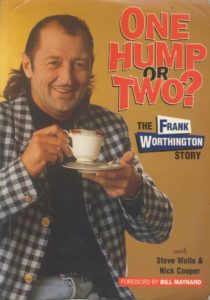
Of course, the lure is far stronger if the title hints at some far more interesting extra-curricular activity – “No Half Measures” (Graeme Souness), “Wasted?” (Paul Smith), “Rock Bottom” (Paul Merson), “Fast and Loose” (Martin Offiah), “Back From The Brink” (Paul McGrath) and my favourite, “One Hump or Two?” (Frank Worthington).
It is surely no coincidence that two not so legendary “characters” of British sport, Steve Davis and Nick Faldo, have chosen puns – Faldo twice, with “Life Swings” and “The Rough With The Smooth”. Given his more colourful private life, these are probably well chosen. Another common approach is to incorporate your name into the pun, such as “Pat On The Back” (Pat Eddery), “Hunt For Goals” (Roger Hunt) and “Ball of Fire” (Alan Ball) – which was also used by “Fiery” Fred Trueman.
Terry Downes came up with the inspired title “My Bleeding Business” for his 1964 autobiography but how is it possible that John Prescott was the first to come up with “Pulling No Punches”? Come on you ex-boxers, it is time to put your hat in the ring. My new autobiography, “Magnus Bowles ‘Em Out”, which includes full details of each of my six wickets this season as well as some revealing stories from the pub afterwards, will be in the shops soon.
The answers to the Titles quiz above:
“The Breaks Are Off” – Graeme Swann (off-break bowler)
“Running Commentary” – David Moorcroft (distance runner and commentator)
“I Declare” – Mike Denness (cricketer and England captain)
“Right Back To The Beginning” – Jimmy Armfield (footballer who normally played at right back)

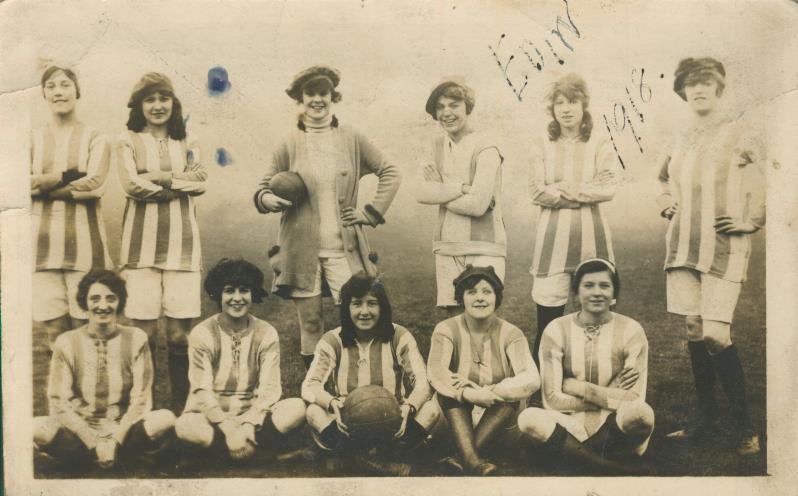 When this Scottish women’s team played in 2018, they would have rightly believed they had already come far. Despite attempts to set up and build up women’s football in the nineteenth century, it was World War One that gave women’s footballers the push they needed. Up until then, too many people still believed that football was still very much a man’s game and women playing it was viewed as unseemly.